
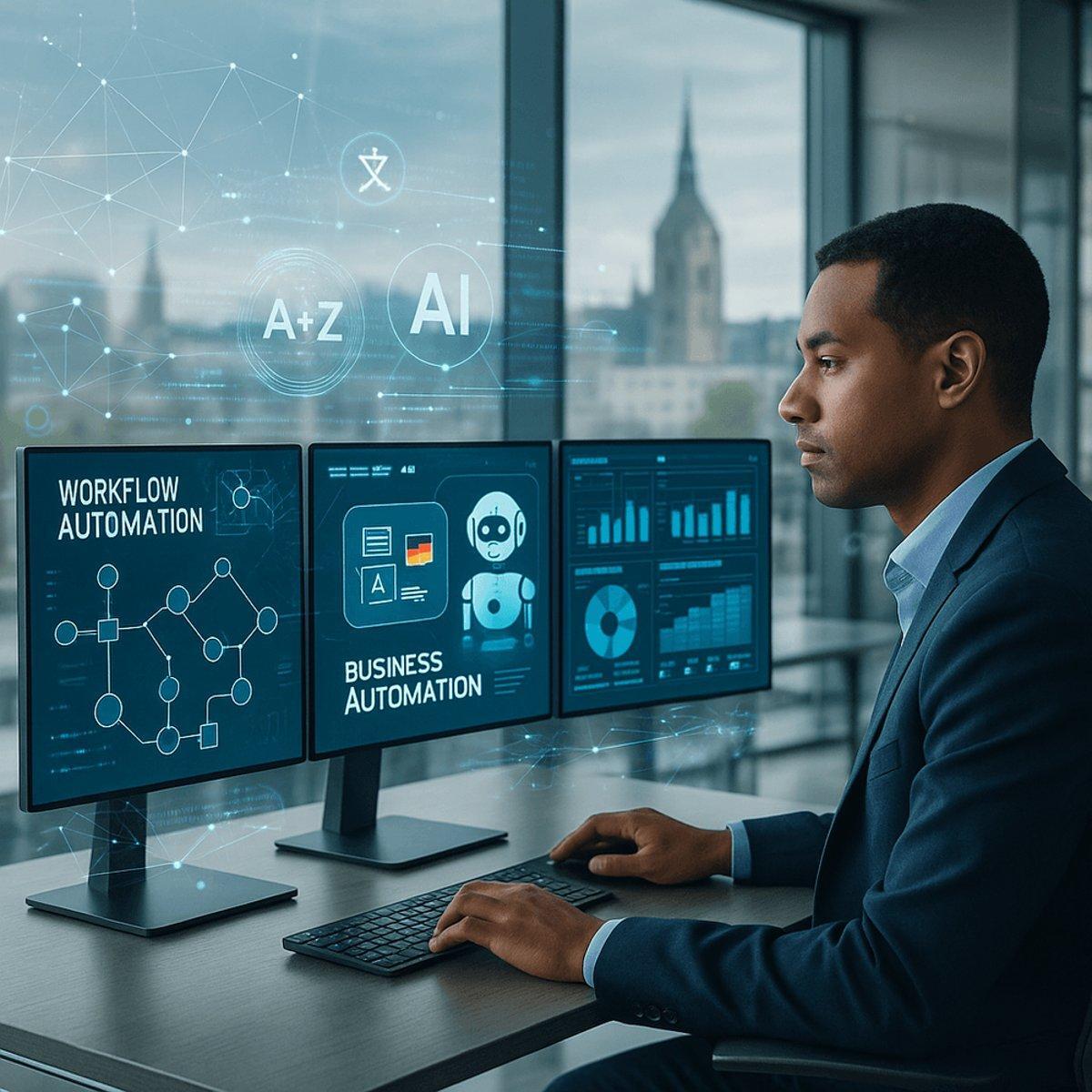
Artificial Intelligence (AI) has evolved from a competitive advantage into a business necessity in 2026. Organizations of all sizes are using AI to automate operations, improve customer experiences, increase productivity, and make smarter decisions. Rather than replacing people, AI is increasingly serving as a powerful assistant that helps employees focus on higher-value work.
1. Intelligent Automation
Businesses are automating repetitive tasks such as:
- Data entry
- Invoice processing
- Email management
- Document verification
- HR onboarding
- Appointment scheduling
This reduces operational costs, minimizes human errors, and allows employees to focus on strategic activities.
Benefits:
- Faster workflows
- Lower operational expenses
- Improved accuracy
- Higher employee productivity
2. AI-Powered Customer Support
AI chatbots and virtual assistants now provide:
- 24/7 customer support
- Instant responses
- Personalized recommendations
- Multilingual conversations
- Automated ticket handling
Businesses can serve more customers without increasing support staff.
3. Smarter Decision Making
AI analyzes massive amounts of business data in seconds, helping companies:
- Forecast sales
- Predict customer behavior
- Identify market trends
- Optimize pricing
- Reduce business risks
Managers can make faster, data-driven decisions instead of relying on intuition alone.
4. Personalized Customer Experiences
Customers now expect personalized interactions.
AI helps businesses deliver:
- Product recommendations
- Personalized marketing campaigns
- Dynamic website content
- Customized email offers
- Individual shopping experiences
This increases customer engagement and conversion rates.
5. AI in Marketing
Marketing teams use AI for:
- Content creation
- Social media scheduling
- SEO optimization
- Audience segmentation
- Advertising optimization
- Campaign performance analysis
AI enables marketers to create targeted campaigns while saving time and resources.
6. Sales Intelligence
Sales professionals benefit from AI through:
- Lead scoring
- Customer insights
- Sales forecasting
- CRM automation
- Automated follow-ups
- Proposal generation
AI identifies high-potential customers, allowing sales teams to prioritize effectively.
7. Human Resources Transformation
AI is simplifying HR processes by:
- Screening resumes
- Scheduling interviews
- Employee performance analysis
- Skill gap identification
- Learning recommendations
- Workforce planning
Recruiters can hire faster while improving candidate quality.
8. Finance and Accounting
Finance departments use AI for:
- Fraud detection
- Expense management
- Financial forecasting
- Invoice automation
- Budget analysis
- Compliance monitoring
AI reduces manual work while improving financial accuracy.
9. Supply Chain Optimization
Manufacturers and retailers leverage AI to:
- Predict demand
- Optimize inventory
- Reduce waste
- Improve logistics
- Track shipments
- Prevent stock shortages
This leads to lower costs and improved customer satisfaction.
10. AI in Manufacturing
Smart factories now use AI for:
- Predictive maintenance
- Quality inspection
- Production optimization
- Robotics automation
- Energy management
- Equipment monitoring
These improvements reduce downtime and increase operational efficiency.
11. Cybersecurity Enhancement
AI strengthens cybersecurity by:
- Detecting suspicious activities
- Preventing cyberattacks
- Monitoring networks in real time
- Identifying malware
- Automating threat response
Businesses can respond to security threats much faster than with traditional systems.
12. AI-Powered Content Creation
Businesses increasingly use AI to create:
- Blog posts
- Product descriptions
- Social media content
- Marketing emails
- Video scripts
- Business presentations
This accelerates content production while allowing teams to focus on creativity and strategy.
13. Predictive Analytics
AI predicts future business outcomes by analyzing historical data.
Applications include:
- Customer churn prediction
- Equipment failure prediction
- Demand forecasting
- Revenue forecasting
- Market trend analysis
This helps businesses plan proactively rather than reacting to events.