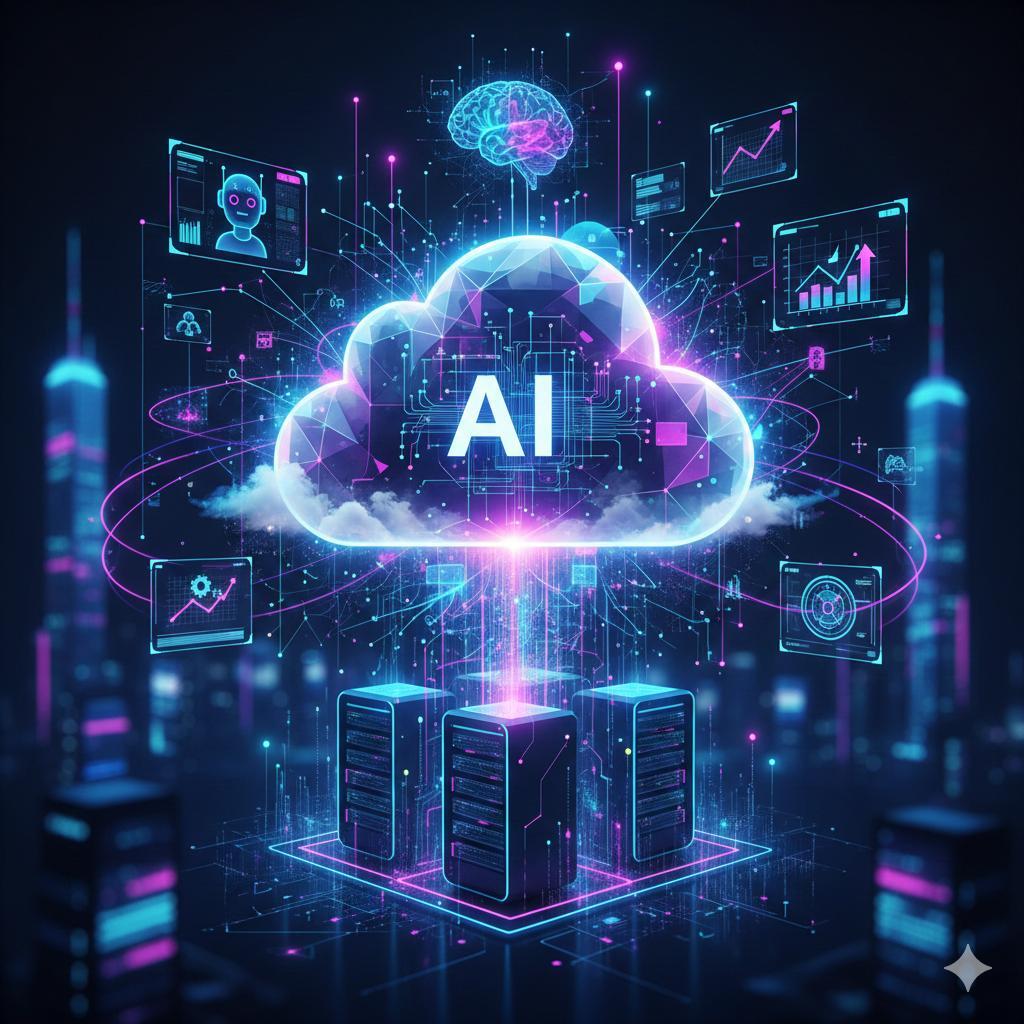
Cloud computing in 2026 continues to evolve rapidly, driven by AI, automation, security, and sustainability. Organizations are focusing on smarter, more secure, and cost-effective cloud strategies to accelerate digital transformation.
1. AI-Native Cloud Platforms
Cloud providers are embedding generative AI and AI agents directly into their platforms. Businesses are using AI-powered services for:
- Intelligent automation
- Code generation
- Customer support
- Predictive analytics
- Document processing
AI is becoming a core feature rather than an add-on.
2. Multi-Cloud and Hybrid Cloud Growth
Organizations are increasingly adopting multiple cloud providers to:
- Reduce vendor lock-in
- Improve disaster recovery
- Meet compliance requirements
- Optimize costs
- Increase flexibility
Hybrid cloud remains popular for industries like healthcare, banking, and manufacturing where sensitive workloads stay on-premises.
3. Edge Computing Expansion
As IoT devices grow, more data is processed closer to where it is generated instead of sending everything to centralized cloud data centers.
Benefits include:
- Lower latency
- Faster real-time decisions
- Reduced bandwidth usage
- Better user experiences
Industries benefiting include:
- Smart cities
- Healthcare
- Manufacturing
- Retail
- Autonomous vehicles
4. Cloud Security First
Cybersecurity remains the top priority.
Major trends include:
- Zero Trust Architecture
- Identity-first security
- AI-powered threat detection
- Continuous monitoring
- Automated compliance
Security is now integrated into every stage of cloud deployment.
5. Serverless Computing Continues to Grow
Developers increasingly use serverless platforms because they:
- Reduce infrastructure management
- Scale automatically
- Lower operational costs
- Speed up application deployment
Businesses pay only for actual execution time.
6. FinOps (Cloud Cost Optimization)
Cloud spending continues to rise, making cost management essential.
Organizations are investing in:
- Resource optimization
- AI-driven cost analysis
- Automated scaling
- Budget monitoring
- Usage forecasting
FinOps teams help maximize cloud ROI.
7. Sustainable Cloud Computing
Cloud providers are investing heavily in greener infrastructure through:
- Renewable energy
- Carbon-neutral data centers
- Energy-efficient processors
- Intelligent workload scheduling
Sustainability is becoming a key factor in cloud strategy.
8. Kubernetes and Containerization
Containers remain the preferred way to deploy modern applications.
Key benefits include:
- Portability
- Scalability
- Faster deployment
- Simplified DevOps
- Better resource utilization
Kubernetes continues to be the dominant container orchestration platform.
9. Industry-Specific Cloud Solutions
Cloud vendors now offer specialized solutions for industries such as:
- Healthcare
- Banking
- Government
- Manufacturing
- Retail
- Education
These platforms include built-in compliance, security, and workflows tailored to each sector.
10. Cloud-Native Application Development
Organizations are moving away from traditional monolithic applications toward:
- Microservices
- Containers
- APIs
- Event-driven architecture
- Continuous integration and deployment (CI/CD)
This approach enables faster innovation and easier scaling.
11. Platform Engineering
Internal developer platforms are becoming common, allowing engineering teams to:
- Standardize deployments
- Improve developer productivity
- Automate infrastructure
- Enforce security policies
- Reduce operational complexity
12. AI-Powered Cloud Operations (AIOps)
Cloud operations increasingly rely on AI to:
- Detect anomalies
- Predict outages
- Automate incident response
- Optimize infrastructure
- Improve application performance
AIOps reduces downtime and enhances operational efficiency.
Key Benefits of Cloud Computing in 2026
- Faster digital transformation
- Enhanced scalability
- Improved security
- Reduced infrastructure costs
- Better disaster recovery
- Increased business agility
- Support for AI and machine learning workloads
- Stronger compliance and governance
Conclusion
Cloud computing in 2026 is defined by AI integration, hybrid and multi-cloud adoption, edge computing, advanced cybersecurity, FinOps, sustainability, and cloud-native development. Organizations that embrace these trends can improve innovation, resilience, and operational efficiency while staying competitive in an increasingly digital economy.